Turning dark, windowless spots into welcoming spaces is easier with fake windows. These artificial windows mimic natural light, making the area look better. Adding fake windows to your decor can make your basement more inviting. This is great for basement apartments or any room missing natural light.
These special windows can change the feel of your space, adding light without big renovations.
Ads
The Benefits of Fake Windows in Basements
Fake windows are a great choice for making basements look better. They turn dull and dark areas into bright, welcoming places. By looking like real windows, they make it seem as if there’s natural light around.
Enhancing Aesthetics and Atmosphere
Adding fake windows to a basement adds both beauty and purpose. This choice can really make the area look nicer. They can have images of beautiful views, offering an escape. This not only makes the space seem deeper but also more welcoming, promoting relaxation and fun.
Creating an Inviting Space
Basements can feel tight and unwelcoming. Fake windows help by making the space feel more open. They improve the look and bring in a warmth that makes the area brighter. Using soft lights with these windows makes the basement cozy, great for spending time with others or relaxing alone.
What are Fake Windows?
Fake windows are designed to look like real windows but don’t function the same way. They are good for places without much natural light, such as basements. This trick can make a room feel brighter and more open.
Overview of Fake Window Panels
Fake window panels look like real windows through clever design. They often use high-quality images on light materials. People can choose frames that fit their home’s style, making spaces more beautiful.
These panels can also have LED lights to mimic sunlight. This feature makes dark rooms appear brighter and more welcoming.
Materials Used in Fake Windows
The materials used are important for making fake windows seem real. Some common materials are:
- Aluminum frames for durability and a modern look.
- High-density foam boards that serve as a sturdy base.
- Fabric with vibrant, detailed prints that simulate real landscapes.
These materials help create fake windows that are not only visually appealing but also light and easy to set up. They can change the look and feel of any room.
Transforming Basement Spaces with Fake Windows
Adding fake windows can truly change basements. They make it seem like there is natural light shining through. This not only makes the space look better but also adds a touch of style and usefulness.
To make basements nicer, adding fake windows in dark spots is smart. Putting them near where people hang out or play games makes the area welcoming. If you place these windows across from real ones, it spreads light evenly and makes everything look bigger.
Adding these fake windows does more than just make the place pretty. It turns a boring basement into a fun spot for hanging out or taking it easy. It meets many needs and tastes.
How Do Fake Windows Work?
Fake windows use smart design to make rooms look better. They have special lights to mimic the sun’s light. This makes the room feel more welcoming and vibrant.
Lighting Mechanisms and Technology
Fake windows use advanced light tech to copy daylight. They shine through images with LED lights for a real sunny look. They save energy and last long, too.
They’re smartly designed with features like adjustable brightness. With a remote, you can easily change the light for any occasion.
Creating Ambient Illumination
Ambient lighting is key for brightening dark areas. With fake windows, even basements can feel cozy and welcoming. This lighting makes rooms seem bigger and more comfortable.
Placing fake windows strategically boosts their effect. They make spaces not only comfier but prettier as well.
Different Types of Fake Windows
Finding the right kind of fake window can really change a room without windows. There are two main types: lightboxes and illuminated panels. Each has its own look and benefits.
Lightboxes as Faux Windows
Lightboxes are popular because they can be used in many ways. They often use LED snap frames to hold pictures. This mimics natural light, making the room feel more open. It’s great for basements or offices without windows.
Illuminated Window Panels
Illuminated panels are another great choice. They look good and light up the room. You can get them in many designs, brightening up dark spaces. They help make a room feel welcoming and bigger.
Installation Process for Fake Windows
Making a faux window can make your space better without changing its structure. Installing DIY fake windows is something most homeowners can do. It can make a regular room special easily. You can choose to do it yourself or get professional help for better peace of mind.
DIY vs. Professional Installation
Doing it yourself saves money and lets you make it just how you want it. It lets you be creative with things like EL sheets, which look like natural light. Making it can feel really rewarding. Hiring professionals, though, means you get their know-how and they make sure everything’s safe and looks good. Often, whether someone chooses DIY or professional help depends on how skilled they are and how much time they have.
Steps to Install Fake Windows
Here’s how to put up DIY fake windows:
- Pick a good spot for the faux window, ideally where you can easily see it.
- Use a tape measure to find out how big you want the window to be and mark it.
- Stick self-adhesive Velcro on the wall and the back of the EL sheet for easy attachment.
- Put the EL sheet on the wall firmly.
- Measure around the sheet. Add 10% more when you buy window trim, to match the room.
- Cut the trim with a miter saw, paint it to fit in, and attach it around the faux window.
- Put up a curtain rod above the faux window, make it wider than the trim to maximize light.
- Hang light curtains from the rod that go all the way to the floor.
- Last, plug in the EL sheet and arrange the curtains to get the light effect you want.
Always think about safety first when setting up something. You should wear safety glasses, gloves, and sturdy shoes. You’ll also need tools like a caulk gun, drill, and utility knife. If you follow these easy steps, your faux windows will make your place brighter and more inviting.
Choosing the Right Design and Image
Choosing the best image for a fake window can really change your basement’s vibe. It makes the space more welcoming and adds to its beauty. This part will talk about different images you can choose, ways to make them your own, and the popular themes that people love.
Image Options for Your Fake Window
Think about what style you love when picking an image. You can pick from different scenes to feel like you’re looking outside. You might like:
- Serene nature views featuring forests or mountains
- Sunny beach scenes that evoke relaxation
- Urban skylines for a modern touch
- Seasonal landscapes that change with the time of year
Customizing Your Fake Window
You can really make your fake windows your own. Matching them to your room’s look makes everything feel right. You could:
- Choose specific colors or art styles
- Use family photos or create your own art
- Pick the size and shape of the window
Popular Themes and Styles
Going for popular themes can set the mood you want. People often choose:
- Tranquil rural settings for a calming effect
- Bold abstract designs for artistic flair
- Picturesque coastal views that inspire wanderlust
Finding images with these themes mixes creativity and coziness. It makes your basement a better place to be.
Additional Lighting Tips for Basements
Making your basement brighter isn’t only about adding fake windows. You can use a mix of creative strategies to make these spaces shine. Try using mirrors and different types of lights together. This makes basements more welcoming and bright.
Mirrors as Reflective Features
Putting mirrors in your basement can change how it feels. They bounce back both sunlight and lamp light, making everything lighter. If you place mirrors across from windows or lamps, they reflect light back. This trick makes your basement seem bigger and more open.
Layered Lighting Techniques
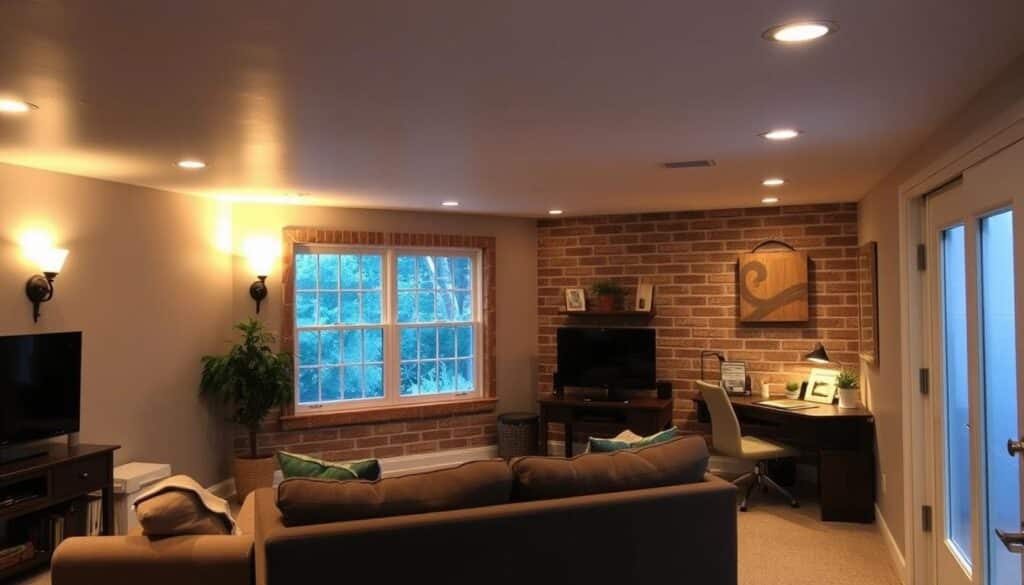
Having different layers of light is key to good lighting. Mix ambient, task, and accent lighting for the best effect in basements. Hang ceiling lights for overall light, and add lamps in spots where you need to see well, like reading or working areas. Combining these lights keeps your basement free from dark corners, making it both useful and nice to look at.
Cost-Effectiveness of Fake Windows
Fake windows are an affordable way to light up basement areas. They don’t cost as much as putting in real windows. People looking for cheap lighting solutions will like fake windows.
Price Range for Quality Products
Buying fake windows saves you money. Good fake windows cost between $389 and $538. Real windows are more expensive.
Aluminum windows cost from $200 to $800, and vinyl ones are $300 to $900. Wood windows are even pricier, from $700 to $1,800. Composite and fiberglass types range from $600 to $1,500 and $700 to $1,400. This makes fake windows a great deal for saving money.
Long-Term Savings on Lighting
Fake windows
can cut your lighting bill. They reduce the need for other lights. This means lower electricity bills over time.
Energy-efficient windows save 25%-30% on energy. This can save you $126 to $465 a year on energy bills. Using fake windows for light can also help save energy. This is smart for those watching their spending.
Testimonials and Customer Experiences
Customers love how fake windows change their dark basements. Many say these windows make rooms feel light and improve mood. They note fake windows are a smart choice for making homes look better.
Real-Life Success Stories
People everywhere are giving their basements a new life with fake windows. They choose designs that catch the eye and make the room welcoming. Users say their basements are now cozy spots, thanks to these windows.
Impact on Home Value and Appeal
Fake windows can also make a house worth more. Homes with these updates attract buyers and can sell for up to 15% more. This makes the house stand out, pleasing those who want a cozy and efficient home.
Comparative Analysis: Fake Windows vs. Real Windows
When it comes to fake vs. real windows, many things matter. This includes how much they cost to put in and how much work they take to keep up. Knowing these differences helps people choose what’s best for their homes.
Cost and Installation Differences
Fake and real windows have different prices and installation processes. For example, real windows like aluminum ones cost about $300 to $800. Vinyl ones are $300 to $900, and wood windows can go up to $1,800. Fiberglass and composite are in between these prices.
Putting in real windows might mean changing the building’s structure, which adds to the cost. But, fake windows are easier and cheaper to install because they don’t need big changes.
Maintenance and Upkeep
Real and fake windows also differ in how much work it takes to keep them nice. Wood windows need lots of care, like cleaning, sealing, and checking for damage or bugs. But, fake windows are way easier to look after. You just need to clean them from time to time.
Vinyl and fiberglass are good because they last long and don’t need much care. This makes them a great choice over the usual kinds.
Conclusion
Fake windows bring many good points for turning dark basements into nice, friendly places. They look good and save money over real windows. Plus, they’re easy to put in, which is another reason why people like them.
There are many styles of fake windows to choose from. This lets you make your basement look just how you want. People who have them say they really make the room better. It means basements don’t have to be dark anymore. They can be bright and welcoming spots in a home.
FAQ
How do fake windows improve a basement’s atmosphere?
Fake windows add natural light and a view, making basements feel bigger and warmer. This is great for rooms without real windows.
What materials are commonly used in fake windows?
They’re made of light aluminum frames and fabric images. This mix helps create a look that seems real yet is simple to set up.
Can I install fake windows myself?
Yes, setting up fake windows is doable on your own. You can also opt for professional help. It includes picking the frame, attaching it, and possibly hooking up lights.
What types of fake windows are available in the market?
The market offers lightbox windows and panels with LED lighting. These options provide both beauty and practical light.
How do LED lights contribute to the effectiveness of fake windows?
LEDs light up the images, mimicking natural sunlight. They can be adjusted and controlled remotely, letting you change the mood any time.
What are some popular themes for fake window images?
Choices include peaceful nature, beach scenes, and seasonal designs. They let you pick styles that best match your home’s look.
How do fake windows compare to real windows in terms of cost?
Fake windows are cheaper than real ones. They don’t need big changes to your home. Costs vary between 9 and 8.
Can fake windows affect the resale value of a home?
Yes, they make your home more attractive to buyers. This boosts its value and livability, a smart move for homeowners.
What additional lighting strategies can be used alongside fake windows?
Add mirrors to spread light and use varied lighting to brighten space. This makes rooms look larger and brighter.
Are fake windows suitable for all interior designs?
Yes, they can match any home style. Fake windows are flexible in design, ensuring a perfect fit with your decor.
Content created with the help of Artificial Intelligence.